
2023—2024Community Justice Centre (CJC) & Family Justice Court UX Research + Design Lead Designing around children's lives, not their parents' disputes

Divorce disputes in Singapore's family courts often turn on "he said, she said" — undocumented handovers, untraceable payments, screenshots scattered across phones.
Community Justice Centre collaborated with the Family Justice Court to help separated parents collate this evidence systematically, supporting document-based court decisions. However, it was assumed that parents would use it as a tool whose entire purpose was preparing a case against the other parent.
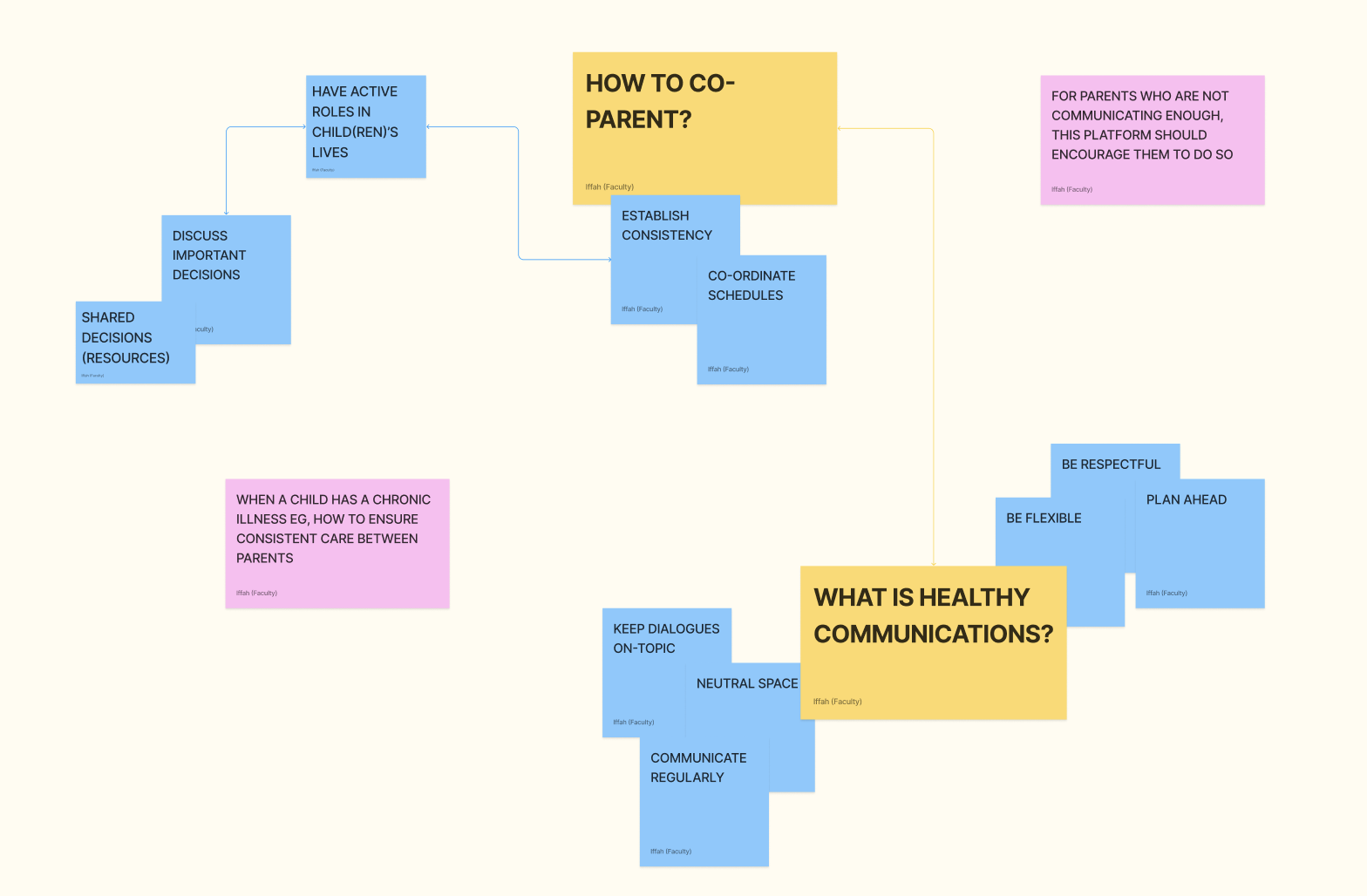
Documentation is a burden; hence, it will not a product goal.
Our research interviews with people managing co-parenting arrangements showed that document collection was a chore they resented—and formalising it for legal use made it more painful, not less. One parent's resignation summed it up: "Realised a lot of screenshots to work around.” They were already improvising with screenshots and ad hoc records — scattered across their phones with no structure, no timestamps courts could trust, and no completeness.
An app that led with "collect evidence" would have asked the most exhausted users to do more of the tasks they hated, and armed the most acrimonious ones with a weapon, used ‘against’ a party in court.
Our own north-star question flipped accordingly: how might we ensure healthy communication between parents and avoid "evidence collection" being used against a parent?
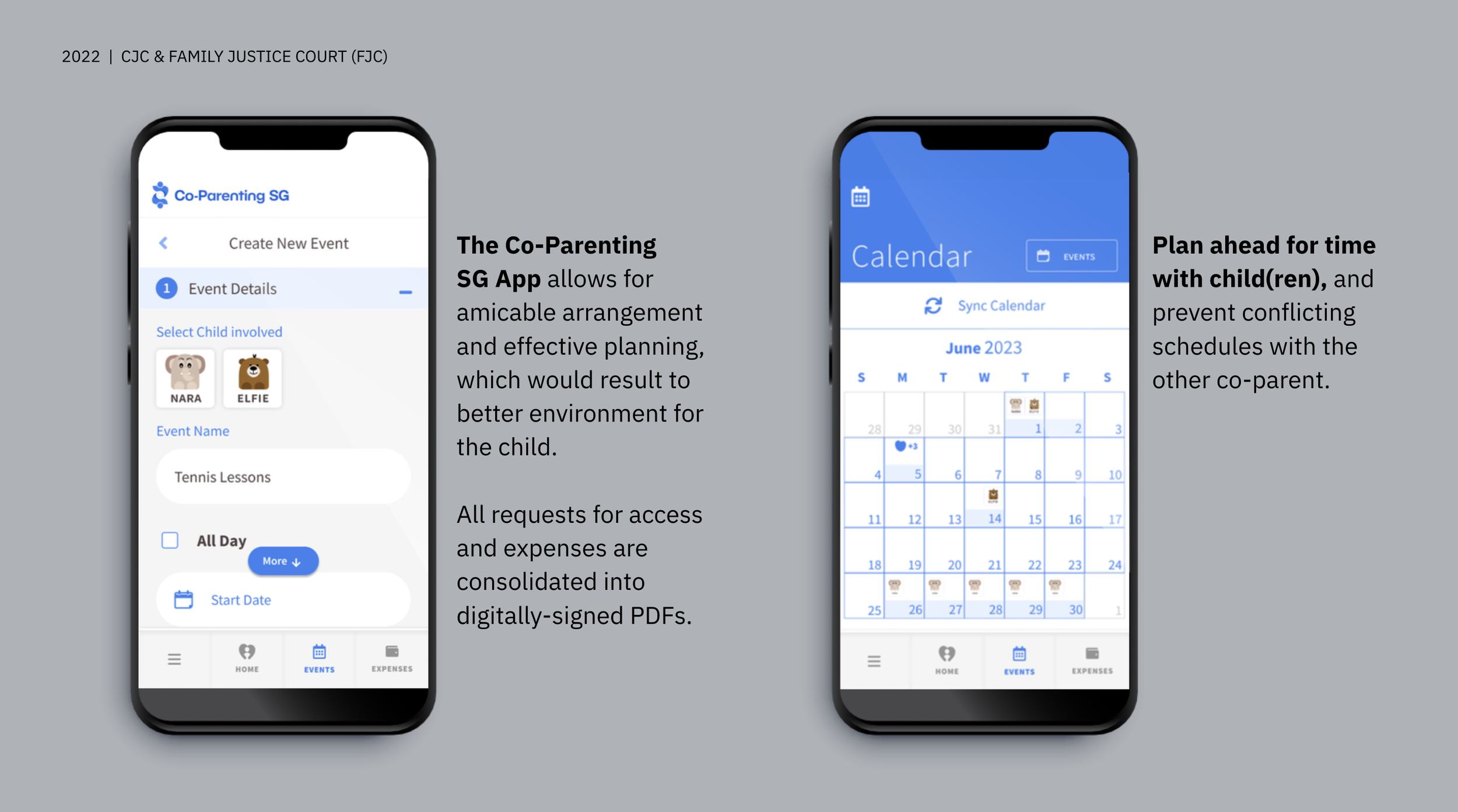
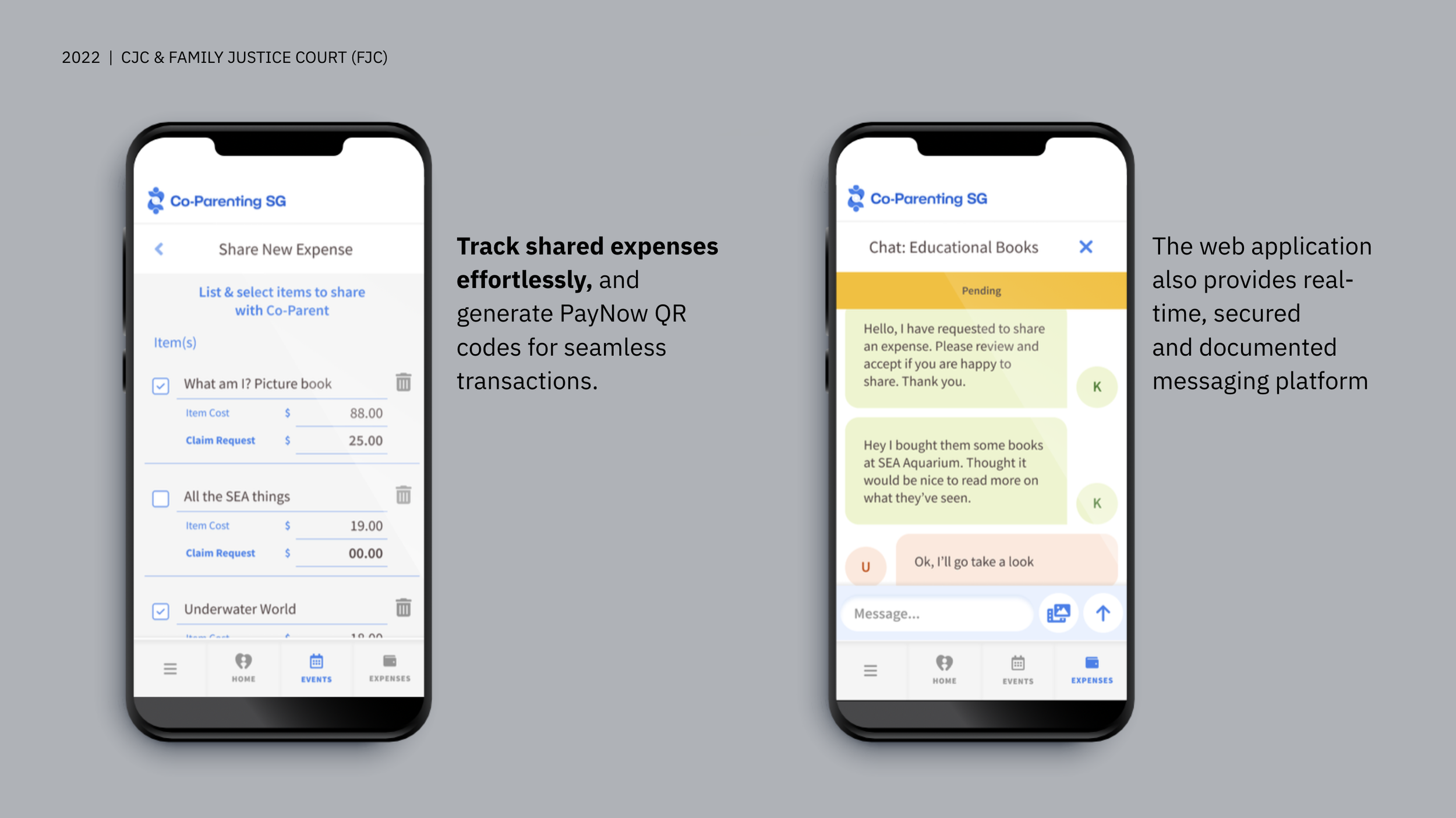
COPA was designed around what parents actually needed to coordinate — time with their children, handovers with check-ins, shared expenses and partial payments, chats tied to each event.
The court-ready documentation became a byproduct: every event, payment, and chat automatically generated exportable logs (PDF and CSV), timestamped and complete. Parents use the app to co-parent; the evidence assembles itself. We worked with FJC to refine which fields constituted valid evidence — but designed them as ordinary form fields, not legal instruments.
We designed for the parents so the app could fail worst. They set the design bar.
Of four parent personas, the two cooperative ones didn't need us — mature co-parents manage with a shared calendar, and a forgetful parent is a reminder problem. The conflict lived with the other two: the financially unstable parent working odd jobs and disputing maintenance, and the competitive "he say, she say" parent who distrusts their ex entirely. These were the parents furthest from positive co-parenting — and the ones an evidence-framed tool would arm rather than help.
Designing within institutional constraints
The challenge was balancing the court's evidence requirements with the realities of parents navigating an already demanding legal process.
Our role was to simplify the experience without compromising what the court required.
FJC defined its evidence requirements through Excel logs. Our task was to translate these into simple, intuitive form fields while preserving their legal integrity.
While we couldn't change mandatory evidence or processes, we could surface user insights, reduce friction, and ensure design decisions reflected both institutional needs and real user behaviour.
Translating legal requirements into a usable experience
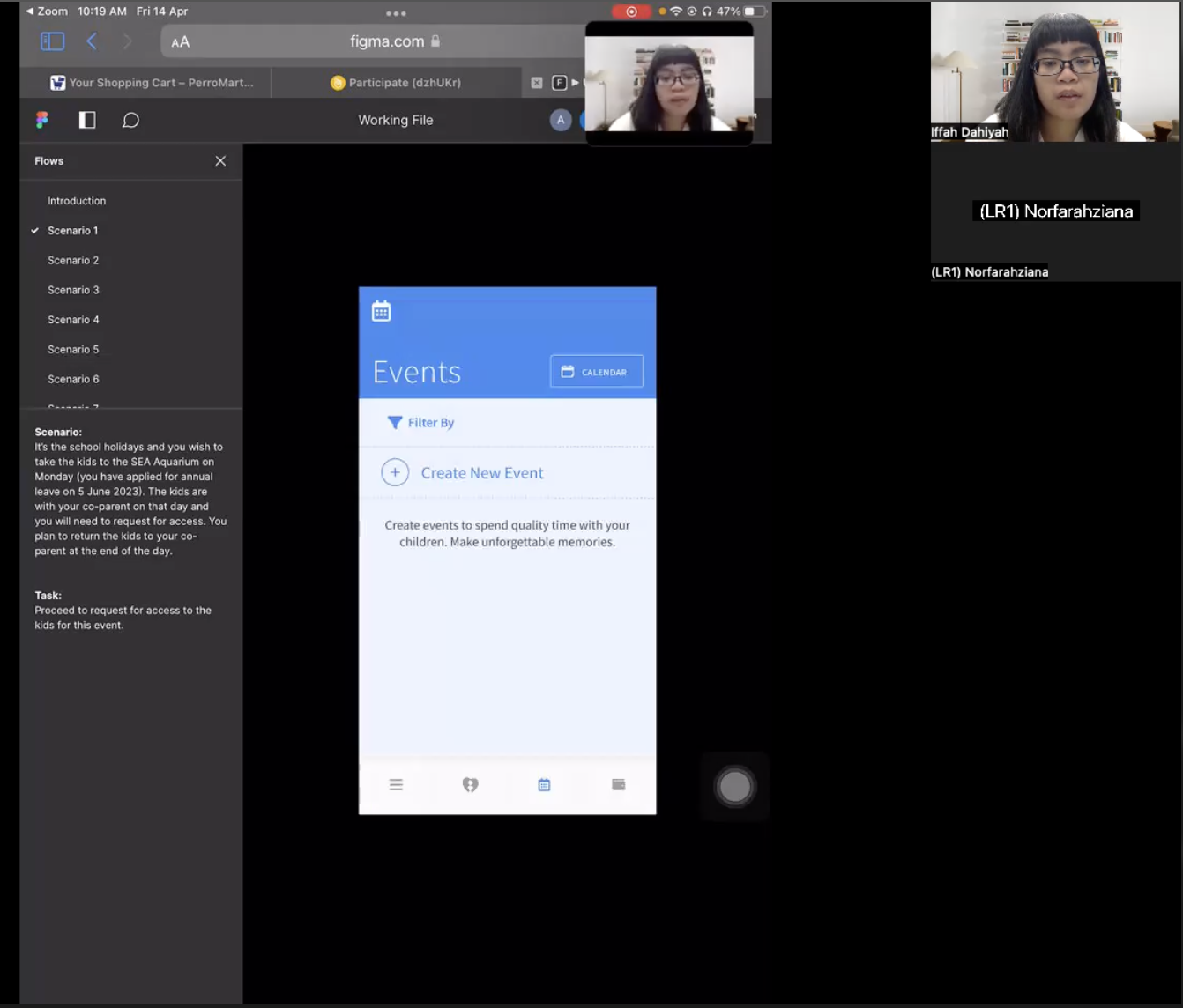
Early usability tests revealed unclear instructions and low task success. Working closely with FJC, we clarified requirements, simplified the language, restructured the forms, and validated the improvements through further testing.
We also conducted a second round of research on pricing and recommended a minimal one-time fee to keep the barrier to entry low.

A note on CJC
The Community Justice Centre ceased operations in late 2025. The project was paused after the first phase of development. What remains here is a record of a decade-long design relationship — and an attempt to capture the work, people and questions that shaped it.